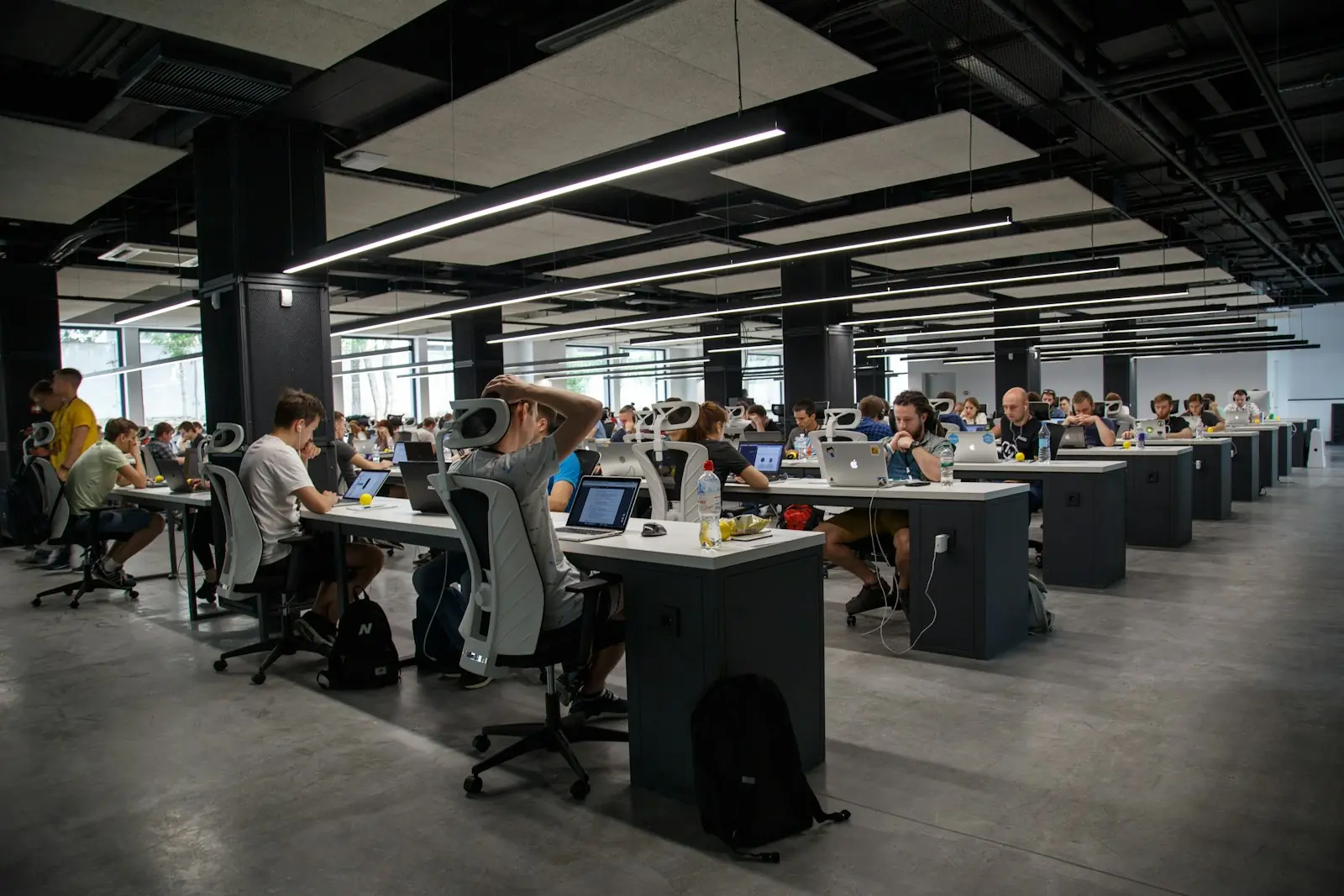
Hackathon organisers in BangaloreThirty-six hours, two hundred laptops. The Wi-Fi is the event.
Corporate hackathons, open developer hackathons and campus-partnered challenges in Bangalore — planned around what actually breaks: the network, the power strips, the 3 am food run and the judging queue.
How do you organise a hackathon in Bangalore?
Organise a hackathon by fixing the goal and the problem statements first, then the format (internal or open, 24 or 36 hours), the venue with overnight access, and the infrastructure: Wi-Fi for about four devices per participant and at least 2.5 power outlets each, per MLH’s organiser guide. Add mentors, overnight food, written rules and timed, science-fair judging.
A hackathon is the one corporate event where the audience is also the content. If the network slows, nobody builds; if judging drags, the best teams leave before results; if the rules on code ownership are vague, legal finds out after the demo. Most of what follows draws on the Major League Hacking (MLH) organiser guide (MLH Organizer Guide), the most detailed public playbook we found, adapted for Bangalore venues and corporate teams.
Hackathons rarely fail on ideas. They fail at 2 am.
- The network collapses at kick-off.Two hundred people clone repos and pull containers in the same ten minutes. MLH plans for four devices per hacker; we brief the venue or a specialist Wi-Fi partner in writing.
- Power strips run out by hour three.MLH says assume at least 2.5 outlets per hacker. Daisy-chained extension boards are a safety problem, so the electrician plans the floor.
- Half the registrations never show.MLH notes most events see a 30–50% drop-off between registration and attendance, about 50% when the event is free. Food and seats are planned to check-ins.
- Judging overruns and finalists leave.Without a timed plan, judging eats the closing ceremony. We schedule judges per table with a formula, not a hope.
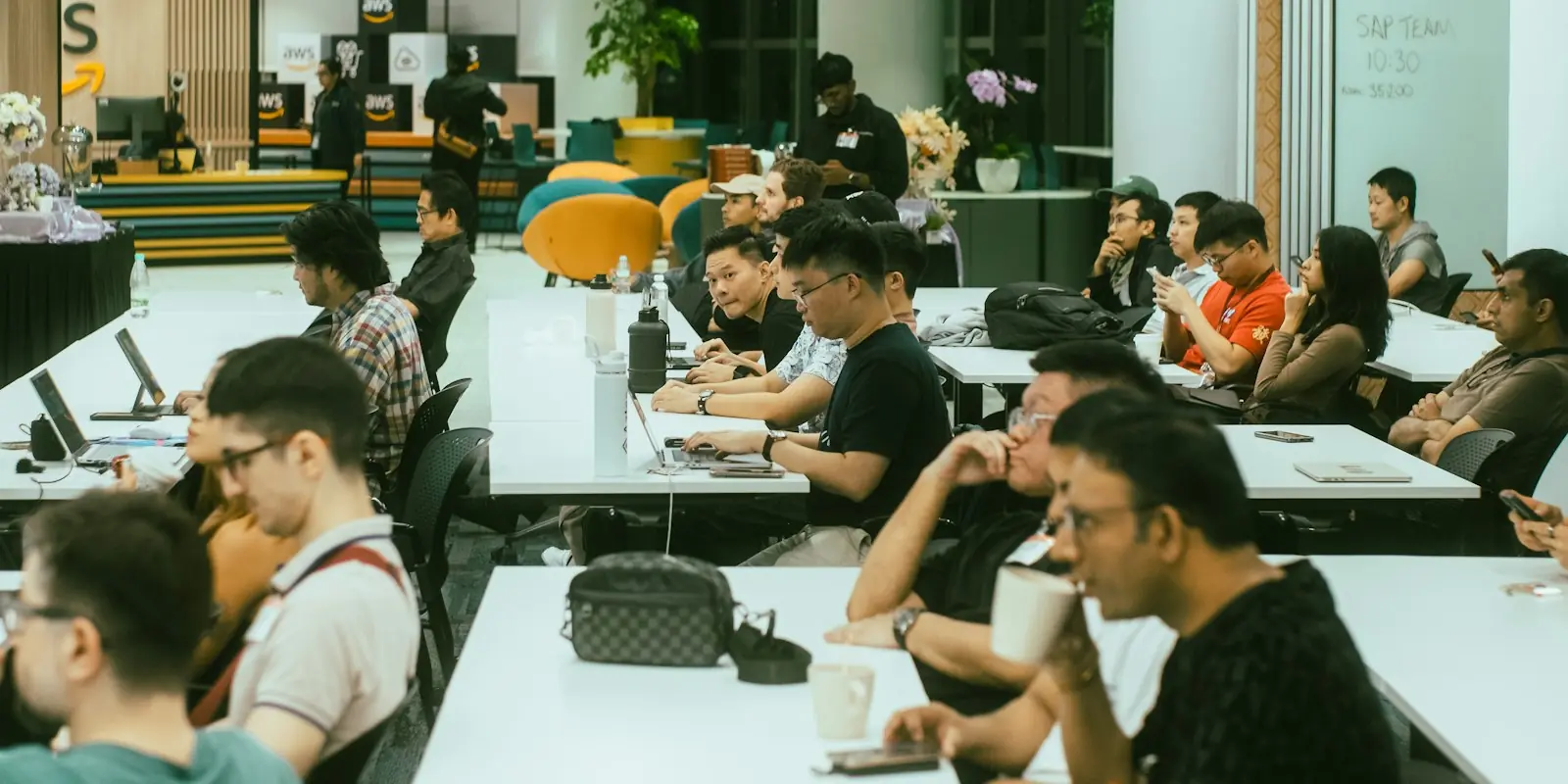
What we run, so your engineers can mentor and judge
- Venue with overnight access, a quiet rest area, showers or a nearby hotel block
- Network brief, wired drops for the stage and judging, power plan drawn with the electrician
- Registration with team formation, approval rules and check-in on the day
- Problem-statement launch, mentor rota and an office-hours board
- Meals and snacks across the night, with dietary counts updated at each check-in
- Judging plan: tables, timings, scoring sheets and a results run-of-show
- Stage, screens and sound for kick-off, demos and the prize ceremony
Corporate hackathon vs open hackathon
The same 36 hours can serve very different goals. Decide this first — everything else follows.
| Format | Who takes part | Typical goal | What changes in the plan |
|---|---|---|---|
| Internal corporate hackathon | Your employees, often cross-team | Prototypes for real product problems, culture, retention | Code stays on company systems; managers agree time off work; IP is already the company’s |
| Open or developer-community hackathon | External developers, students, startups | Developer adoption of an API or platform, hiring pipeline, brand | Written rules on IP and data, a code of conduct, prize terms, age checks for minors |
| Campus-partnered challenge | Students from partner colleges | Early-talent hiring, employer brand | College permissions and travel; supervision for overnight formats |
| Online or hybrid | Distributed teams, finale in person | Reach beyond Bangalore at lower venue cost | Submission platform, recorded or live online demos, an in-person final at a venue |
MLH asks organisers to adopt and enforce a code of conduct that applies to everyone present — hackers, mentors, sponsors, judges and staff. We recommend that for every format.
Wi-Fi, power and space for a hackathon
Two numbers come from MLH’s venue checklist; the rest is how we turn them into a floor plan.
| Item | Planning figure | Source or basis |
|---|---|---|
| Wi-Fi | Able to handle about 4 devices per hacker | MLH Organizer Guide |
| Power | At least 2.5 outlets per hacker | MLH Organizer Guide |
| Desks | Team tables of 4 with room for laptops, a second screen and hardware kits | Our planning; MLH’s sample FAQ caps teams at 1–4 people |
| Rest area | A dedicated, safe place for people who need to sleep | MLH Organizer Guide |
| Stage and screens | Kick-off, workshops and final demos; wired network at the lectern | Our planning |
| Setup day | Book the venue from the day before for setup | MLH Organizer Guide |
We found no reliable public bandwidth-per-person figure for India, so we size the uplink with the venue’s IT team or a specialist Wi-Fi partner from your expected device count and workload (cloud builds, model downloads, video).
Hackathon planning timeline: 12 weeks to demo day
MLH suggests starting four to nine months out for a large public event. A corporate hackathon at a single venue can run on this twelve-week plan.
T–12 weeks
Goal, format, headcount and budget. Problem statements drafted with product owners. Venue shortlist with overnight access confirmed.
T–10 weeks
Venue contracted, including the setup day. Rules, IP terms and code of conduct drafted for legal review. Prize structure agreed.
T–8 weeks
Registration opens. For a free or open event, MLH advises registering about double your attendance goal — and not more.
T–6 weeks
Mentors and judges confirmed. Network and power brief issued to the venue. Catering plan by meal and by hour.
T–3 weeks
Team formation for solo registrants. Judging plan and scoring sheet finalised. Swag and prizes ordered.
T–1 week
Final reminder and check-in instructions. Food counts set to expected attendance, not registrations.
Day 0
Setup, network test with a full device load, power test, stage rehearsal for kick-off.
Hack days
Kick-off, mentor office hours, meals, a midnight check-in, submissions close on a hard deadline.
Demo day
Science-fair judging, finalists on stage, prizes, then a debrief and results to all participants within the week.
How to judge a hackathon fairly and on time
MLH strongly recommends science-fair judging: teams stay at their tables and judges move between them.
Separate judging rooms are discouraged because each team is only compared with the projects that happened to land in the same room. MLH’s planning formula allows about four minutes per project — two for the demo, one for questions and scoring, one to walk to the next table — and aims for three judging rounds per project. Its worked example: 175 projects judged in 120 minutes needs 18 judges, roughly one judge for every ten projects. It also estimates about one submitted project for every four checked-in hackers (MLH Organizer Guide).
- Publish the criteria before hacking starts — and brief judges on them; MLH advises judges to weigh technical merit over the business pitch
- Use one scoring sheet for every judge, and normalise scores where judges see different tables
- Shortlist three to six finalists for the stage, so the closing ceremony is a show and not a queue
- Decide in advance whether AI coding assistants, pre-written code or open-source libraries are allowed — and say so in the rules
What a hackathon costs to host
We do not publish a per-head figure because the range is too wide to be honest. These are the lines that move it.
| Cost line | What drives it |
|---|---|
| Venue | Overnight access, setup day, security; an office floor is cheapest, a hotel or exhibition hall the most |
| Network and power | Device count, uplink, temporary electrical work and power strips |
| Food | Number of meals across 24–36 hours; plan to check-ins, since MLH notes later meals are claimed less |
| Prizes and swag | Cash prizes, hardware, incubation offers; prize terms need tax and legal review |
| Production | Stage, screens and sound for kick-off and demos; capture for the highlight film |
How a Pani Productions event runs
Brief & ballpark
A 30-minute call with your event owner. You get a format, venue shortlist and an itemised cost range you can take upstairs.
Venue & concept
We check dates, layouts and rooms with venues, run a site recce, and build the creative: theme, stage, content flow.
Production plan
Stage, LED, sound and light specified and drawn. Delegate logistics, rooming lists, transfers and F&B locked to a master timeline.
Rehearsals
Technical rehearsal and a cue-to-cue run with presenters. Backup power, spare mics and playback files ready before doors open.
Show day
One show caller on headset runs every cue. Your team hosts; nobody from your side should have to carry a radio.
Close-out
Reconciled invoice against the estimate, vendor settlement, photos and a short debrief on what to repeat next year.
Questions people ask before they book
We are a 2,000-person IT company in Whitefield. How do we run our first internal hackathon?
How much does it cost to host a hackathon in Bangalore?
How many people actually turn up to a free hackathon?
Can participants use AI tools like ChatGPT or Claude in our hackathon?
Who owns the code built at a corporate hackathon?
Can the hackathon finale be part of our tech summit?
Tell us about the event
Rough is fine. Headcount, a city, a month. We come back with venue options, a format and a cost range you can take to your leadership — before you commit to anything.
- Itemised estimate: venue, food, production, logistics and our fee as separate lines
- Venue options checked for your date, headcount and layout
- GST invoicing for your finance team
Rather talk? +91 77669 40021 · WhatsApp · info@paniproductions.com
Keep planning
- Tech conference and AI summit production
- Conference organisers in Bangalore
- Team building activities in Bangalore
- Corporate event management in Bangalore
- Corporate offsites near Bangalore
- Corporate events and MICE in Goa
- Corporate events in Kerala
- What a corporate event costs in India
- Concert and festival production
- Corporate event questions, answered