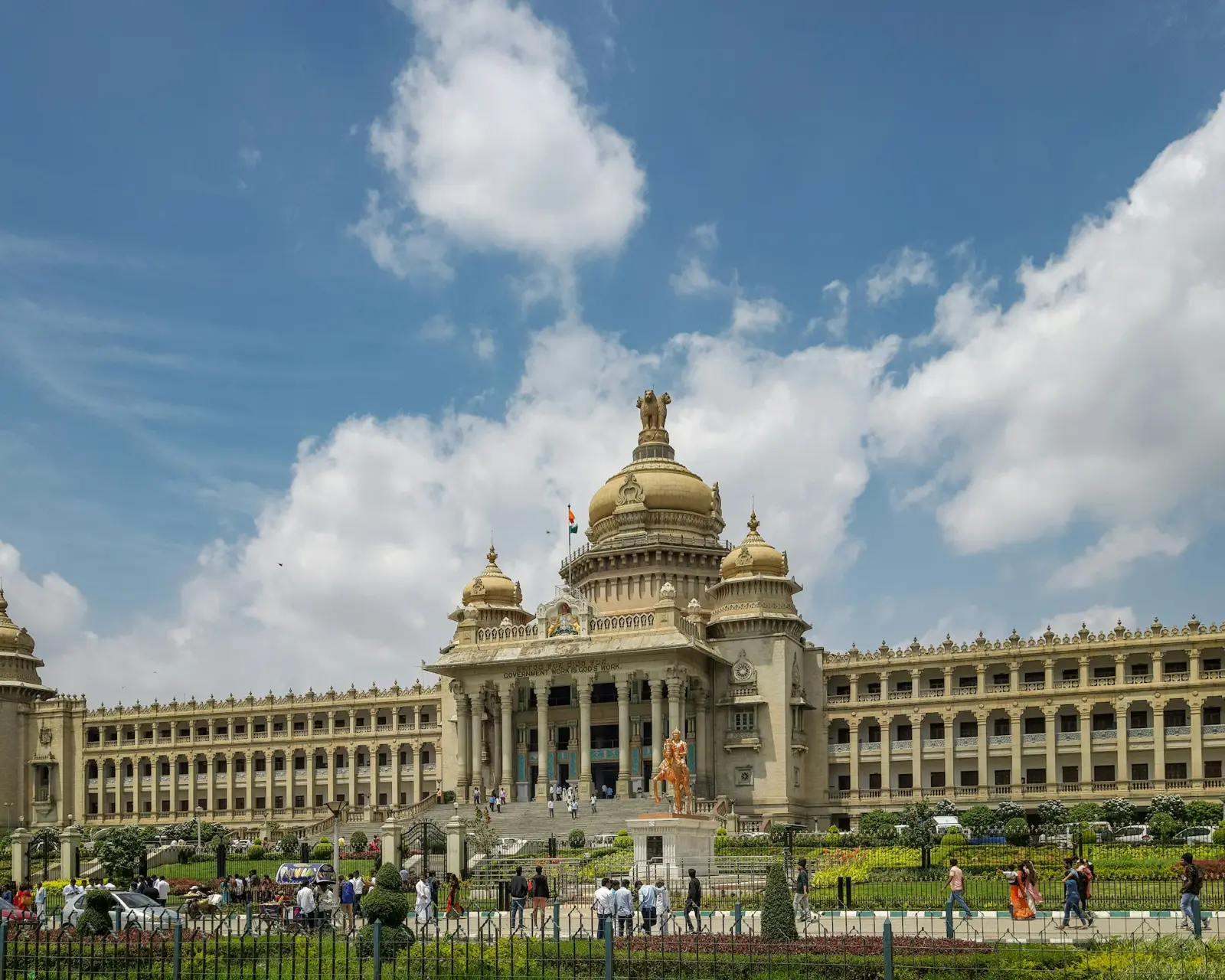
Police permission for events · BangaloreDo you need police permission for an event in Bangalore?
Which events need the Commissioner’s sign-off, which are covered by the venue, and what a permission application has to show — before you print a single invitation.
The short answer on event permission letters to police
Public events in Bangalore with entertainment, loudspeakers or gatherings usually need police permission; invite-only events inside a licensed hotel often do not need a separate one. Live or recorded music as entertainment falls under the 2005 Order, gatherings and processions under the 2009 Order, and loudspeakers need written permission under the Noise Rules.
Rules change; we confirm current requirements with the authority for your date. This page describes what organisers typically need, from the sources linked. It is not legal advice.
Permissions on the plan, not on the morning of the show
- A permissions list for your format, venue and date in the first week
- Venue licences checked before the contract is signed
- Run-of-show built around the 10 pm loudspeaker cut-off
- Applications drafted with the headcount, timings and crowd plan the police ask for
- CL-5, PPL and IPRS tracked as separate lines with owners and dates
Event permission police: the rules that apply in Bangalore
Three instruments decide most Bangalore event permissions, and each covers a different risk: what is performed, who gathers, and how loud it is.
| Your event | What usually needs police sign-off | Who else is usually involved |
|---|---|---|
| Private conference or award night inside a hotel ballroom, invite-only | Often nothing separate for the event itself — but live or recorded music presented as entertainment can fall under the 2005 public-entertainment licence, so we check what the venue already holds | Venue (its licences), PPL/IPRS for music, Excise if alcohol is served |
| Concert, DJ night or show with live performers | Public-entertainment permission from the Commissioner of Police under the 2005 Order | Venue, music licences, Excise, fire safety |
| Outdoor event on a lawn or ground with loudspeakers | Written permission for loudspeakers under the Noise Rules; police permission for the gathering | Venue owner, music licences, power and fire safety |
| Procession, roadshow or gathering on public land | Permission in the prescribed format under the Assemblies and Processions Order, 2009; police deployment charges | Traffic police, civic body, the land-owning department |
| Very large public event (5,000+ expected) | Under the 2025 crowd-control bill (not yet law): written application at least 10 days ahead to an officer set by crowd size | Police, fire, medical, venue, crowd-safety plan |
Sources: SS Rana on the 2005 Order, The News Minute, Jul 2018, The Federal on the 2025 status report, PRS Legislative Research, Noise Rules 2000, Rule 5. Indicative only; the requirement depends on format, audience, music, alcohol and location.
Public entertainment (2005 Order). The Licensing and Controlling of Places of Public Entertainment (Bangalore City) Order, 2005 was issued by the Police Commissioner under the Karnataka Police Act, 1963. The Supreme Court upheld it and treated performances open to the public as “public entertainment” (SS Rana on the 2005 Order). In 2018 the police applied it to music, live and recorded, in pubs that had not taken permission; that notice asked for documents including an occupancy certificate and a fire-safety NOC (The News Minute, Jul 2018).
Gatherings and processions (2009 Order). After the June 2025 stampede, the Karnataka government’s status report said the organisers had “never formally sought police permission in the prescribed format” under the Licensing and Controlling of Assemblies and Processions (Bangalore City) Order, 2009, and that an intimation letter is not a request for permission. It also noted unpaid police-deployment charges under a 2019 Government Order (The Federal on the 2025 status report).
Loudspeakers (Noise Rules 2000). A loudspeaker or public-address system needs written permission from the authority, and cannot be used between 10 pm and 6 am except in closed premises such as auditoria, conference rooms and banquet halls (Noise Rules 2000, Rule 5). See noise rules for events.
Event permission letter to police: what it must show
A permission request is judged on whether the police can plan safety from it, so it must describe the event, not just announce it.
- Organiser details. Company name, a named responsible person, phone numbers that will be answered on the day.
- Venue and its documents. Address, the venue’s own licences, and the occupancy and fire documents the police may ask for.
- Expected headcount and audience. Invite-only employees, or open to the public; ticketed or free.
- Programme and timings. Load-in, doors, show, end time — with any music, performers and loudspeaker use stated plainly.
- Crowd and traffic plan. Entry and exit points, parking, coach drop-off, security staff and their numbers.
- Other permissions. CL-5 liquor licence if alcohol is served, PPL/IPRS music licences, loudspeaker permission.
These are the gaps the 2025 status report listed — participant numbers, assembly point, timing, organiser contacts, traffic and crowd-control plans (The Federal on the 2025 status report).
A 600-person annual day on a Whitefield lawn
An IT company plans its annual day on a resort lawn in Whitefield: 600 employees, a band, a DJ after dinner and a bar. That one brief touches every rule above. The band and DJ are entertainment, so the public-entertainment position is checked with the venue and the police. The lawn is open air, so loudspeakers need written permission and must stop at 10 pm (Noise Rules 2000, Rule 5). The bar needs a CL-5 occasional licence unless the venue’s own licence covers it (see liquor licence for a corporate party). Music needs PPL and possibly IPRS licences (see music licences).
The practical fix is in the run-of-show: the band plays on the lawn from 7 pm, dinner at 8.30, and the DJ moves into the resort’s banquet hall at 9.45 pm — a closed venue — so the party continues without breaking the night-time rule.
When the answer is different
- Size. The 2025 Karnataka crowd-control bill proposes permission for any event of 5,000 or more, with the deciding officer set by crowd size and a ₹1 crore indemnity bond. It was referred to a Select Committee and is not law yet (PRS Legislative Research).
- Public versus private. Ticketed or open events attract more scrutiny than an invite-only staff event.
- Government property. Grounds and halls owned by the state need that department’s permission as well.
- Outside the city. Resorts around Bangalore, in Goa and in Kerala fall under their own district police and local rules; we confirm with the jurisdictional station.
Questions people ask before they book
Do I need police permission for a corporate event in a Bangalore hotel?
How do I write an event permission letter to the police in Bangalore?
We are a 1,200-person company planning an annual day at a ground in North Bangalore — what permissions do we need?
Is a DJ at an office party treated as public entertainment?
How early should we apply for police permission?
Does the Karnataka crowd control bill apply to corporate events?
Tell us about the event
Rough is fine. Headcount, a city, a month. We come back with venue options, a format and a cost range you can take to your leadership — before you commit to anything.
- Itemised estimate: venue, food, production, logistics and our fee as separate lines
- Venue options checked for your date, headcount and layout
- GST invoicing for your finance team
Rather talk? +91 77669 40021 · WhatsApp · info@paniproductions.com
Keep planning
- Concert permissions and licences in Bangalore
- Noise rules for events in India
- Liquor licence for a corporate party in Karnataka
- Corporate annual day management
- Corporate event management in Bangalore
- Corporate offsites near Bangalore
- Corporate events and MICE in Goa
- Corporate events in Kerala
- What a corporate event costs in India
- Concert and festival production
- Corporate event questions, answered