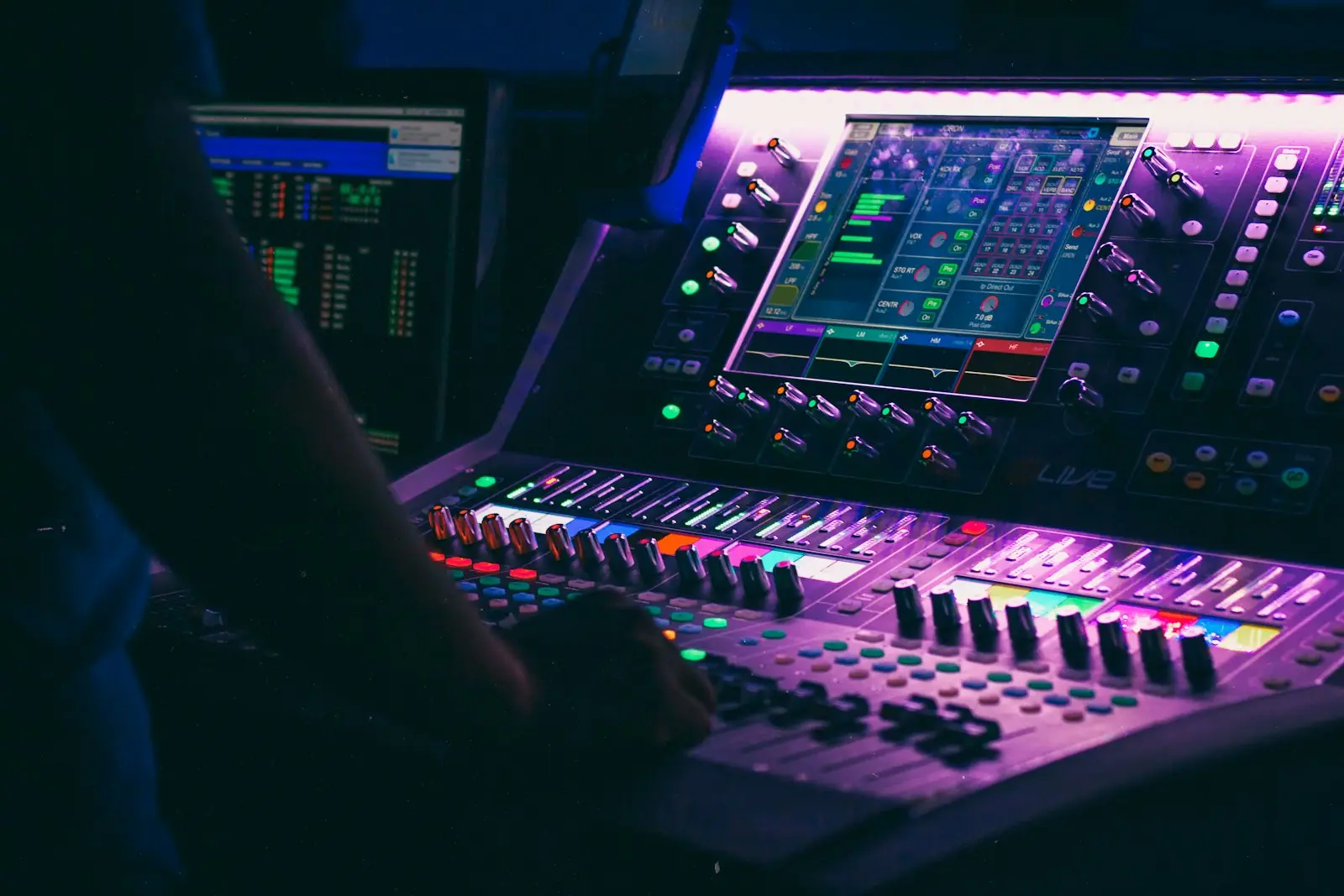
What is a run of showWhat is a run of show?
The minute-by-minute document every crew member works from — what it contains, a real-format example, and why it decides whether a show feels effortless.
Run of show, explained
A run of show is the minute-by-minute script of an event: every segment with its start time, duration, who is on stage, and the exact sound, light, video and stage cue for each moment. The crew works from one version; the show caller calls every cue. An agenda tells guests what happens; a run of show tells the crew how.
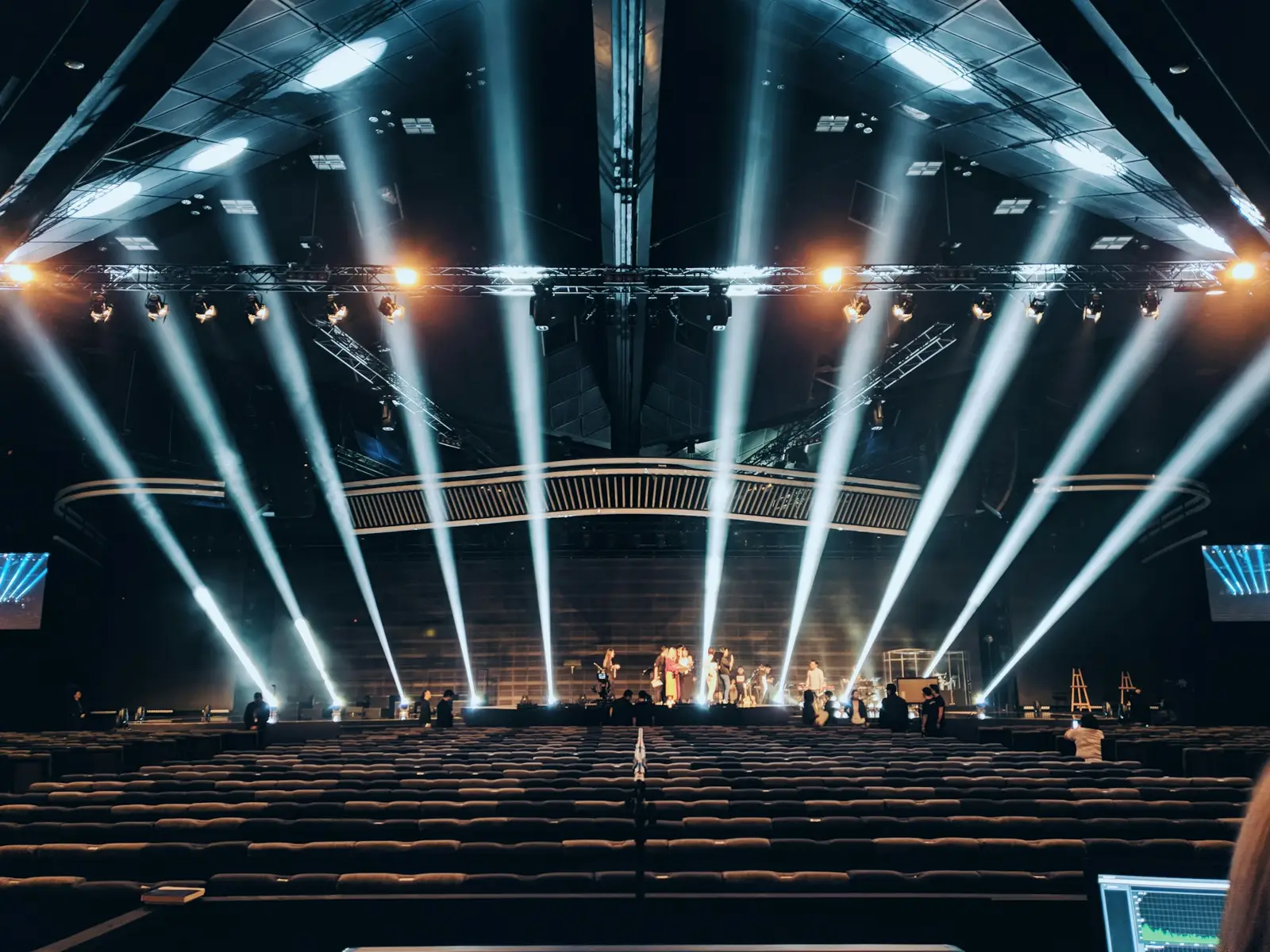
Every show we produce runs from one document
- One versioned run-of-show shared with you and every vendor
- A dedicated show caller on headset
- Technical and dress rehearsals against the final version
- Speaker and performer briefings from the same cues
Run of show example: an award night
This is the level of detail a working run-of-show carries. Each row is a cue someone must execute on time.
| Time | Duration | Segment | Stage / LED | Sound | Light | Owner |
|---|---|---|---|---|---|---|
| 18:55 | 0:05 | Doors close, walk-in music down | Holding slide | Walk-in playlist fades | House to half | Show caller |
| 19:00 | 0:03 | Opening film | Film on LED | Film audio | House out | Video operator |
| 19:03 | 0:05 | Emcee welcome | Event logo | Handheld mic 1 | Stage wash, follow spot | Emcee |
| 19:08 | 0:15 | CEO address | CEO slides (clicker on lectern) | Lectern mic + backup lapel | Lectern special | CEO, slides operator |
| 19:23 | 0:02 | Award category 1 intro | Category sting | Sting audio | Stage wash | Emcee |
| 19:25 | 0:10 | Award category 1: 5 winners | Winner name cards | Walk-up music cue × 5 | Winner spot | Stage manager (trophies) |
Times and cues are illustrative. A real run-of-show lists every cue for the whole event, with a version number and date at the top.
Run of show vs agenda vs cue sheet
Three documents, three audiences.
- Agenda: for guests. Session titles and approximate times. Printed or on the event app.
- Run of show: for the whole crew and the client. Every segment, duration, owner and cue, to the minute.
- Cue sheet or show script: for each department. The sound, light or video operator’s own list, numbered to match the run-of-show.
- Stage-manager notes: walk-ups, trophy order, props and mic hand-offs, taken from the run-of-show.
How a run of show is built and used
The run-of-show is owned by the producer, signed off by the client and called by the show caller.
It starts as a draft from the agenda about three to four weeks out, gains cues as content, speakers and entertainment are confirmed, and is frozen before the technical rehearsal. Every change after that gets a new version number, and old copies are taken off the desks. During the show the caller reads ahead on headset — “standby lights 14, standby video 6… go” — so every department moves on the same breath.
What changes the answer: a 40-person leadership dinner may need a one-page timeline, not a full run-of-show. Anything with a stage, an emcee, awards or video needs the full document — and a rehearsal against it. See what a technical rider is.
Questions people ask before they book
What does a run of show include?
Who prepares the run of show for a corporate event?
Is a run of show the same as a runsheet?
We have a 90-minute award night with 25 awards. How detailed should the run-of-show be?
When should the run of show be final?
What is a show caller?
Tell us about the event
Rough is fine. Headcount, a city, a month. We come back with venue options, a format and a cost range you can take to your leadership — before you commit to anything.
- Itemised estimate: venue, food, production, logistics and our fee as separate lines
- Venue options checked for your date, headcount and layout
- GST invoicing for your finance team
Rather talk? +91 77669 40021 · WhatsApp · info@paniproductions.com
Keep planning
- What is a technical rider?
- What an event management company does
- Emcees and anchors in Bangalore
- Event production in Bangalore
- Corporate event management in Bangalore
- Corporate offsites near Bangalore
- Corporate events and MICE in Goa
- Corporate events in Kerala
- What a corporate event costs in India
- Concert and festival production
- Corporate event questions, answered